
How do I Navigate this menu? Click on the red titles to open and close the drop-down menu sections. Click the black titles to view each page You may need to scroll down or zoom in/out depending on your device. We hope you enjoy, thank you!
St Francis of Assisi
Roman Catholic Church
Office Hours:
Monday - Friday:
9:00AM - 12:00PM & 12:30PM - 5:00PM
Contact:
(303)688-3025
Address:
2746 Fifth St, Castle Rock, CO 80104


Diocesan Ministry Appeal 2026
Thank you for your generosity.
St Francis of Assisi's
Goal: $234,080
100%


May 9th-10th
Intercession
May we show our love for Jesus by living his commandments and, through generous participation in the Diocesan Ministry Appeal, help reveal his love to others through the ministries and outreach of the Church.

The old saying, “When God closed a door, He opens a window” comes to mind with today’s Gospel. Soon, Jesus will ascend to the Heavenly Father, and he is trying to prepare his disciples for this eventuality. The understanding that Jesus will not be with the disciples on earth indefinitely unsettles—scares, even— them. But Jesus reassures them that while he cannot be with them forever physically, he is not abandoning them. They have the commandments to guide them. And in keeping Christ’s commandments, they will be demonstrating their love for Jesus, and he will be present in their actions and their prayers. Further, Our Lord says he will send the Holy Spirit – the Spirit of truth, another Advocate – to be with them forever. Jesus connects love not just with feeling, but with faithfulness. Love is shown by how we live, how we follow his way, and how we care for others. His love is not distant or abstract – it is revealed in presence, in mercy, and in action. “I will not leave you orphans,” he says, reminding us that love always makes a home in the lives of those who need it most. When we support the Diocesan Ministry Appeal, we are living out this love by being the hands and voice of Christ for others, to help those who feel forgotten, to walk with those who are alone, and to witness to the truth that God is still present in our world. Please consider making a gift today to help ensure that no one feels abandoned.
Gospel Reading: Jn 14:15-21
“If you love me, you will keep my commandments.And I will ask the Father, and he will give you another Advocate to be with you always,the Spirit of truth, which the world cannot accept, because it neither sees nor knows it. But you know it, because it remains with you, and will be in you.I will not leave you orphans; I will come to you.In a little while the world will no longer see me, but you will see me, because I live and you will live.On that day you will realize that I am in my Father and you are in me and I in you.Whoever has my commandments and observes them is the one who loves me. And whoever loves me will be loved by my Father, and I will love him and reveal myself to him.”
Intercesión
Que mostremos nuestro amor por Jesús viviendo sus mandamientos y, mediante la generosa participación en la Campaña Ministerial Diocesana, ayudemos a revelar su amor a los demás a través de los ministerios y la labor de la Iglesia.

El viejo dicho: «Cuando Dios cierra una puerta, abre una ventana» me viene a la mente con el Evangelio de hoy. Pronto, Jesús ascenderá al Padre Celestial y está tratando de preparar a sus discípulos para esta eventualidad. Comprender que Jesús no estará con sus discípulos en la tierra indefinidamente los inquieta, incluso los asusta. Pero Jesús les asegura que, si bien no puede estar con ellos físicamente para siempre, no los abandona. Tienen los mandamientos para guiarlos. Y al guardar los mandamientos de Cristo, demostrarán su amor por Jesús, y él estará presente en sus acciones y oraciones. Además, Nuestro Señor dice que enviará al Espíritu Santo —el Espíritu de la verdad, otro Defensor— para que esté con ellos para siempre. Jesús conecta el amor no solo con el sentimiento, sino con la fidelidad. El amor se demuestra en cómo vivimos, cómo seguimos su camino y cómo cuidamos a los demás. Su amor no es distante ni abstracto; se revela en la presencia, la misericordia y la acción. «No los dejaré huérfanos», dice, recordándonos que el amor siempre se instala en la vida de quienes más lo necesitan. Al apoyar la Campaña Ministerial Diocesana, vivimos este amor siendo la mano y la voz de Cristo para los demás, ayudando a quienes se sienten olvidados, acompañando a quienes están solos y dando testimonio de la verdad de que Dios sigue presente en nuestro mundo. Por favor, considere hacer una donación hoy para ayudar a garantizar que nadie se sienta abandonado.
May 2nd-3rd
Intercession
May all who feel overwhelmed by fear, doubt, or hardship find comfort in Christ’s words, “Do not let your hearts be troubled,” and that through our support of the Diocesan Ministry Appeal, may the Church continue to be a source of hope, healing, and compassionate care to those in need.

Parables are an important part of Jesus’ ministry. He uses these stories to convey God’s love and mercy, to describe the Heavenly Kingdom, to teach us how we are to live lives of service and compassion. In today’s Gospel, however, Jesus sets aside the parable format and states outright, “I am the way, the truth, and the life.” He is the righteous path—the way—the one that leads us to everlasting life. He is wisdom—the truth; his words provide the light by which we live our lives. He is salvation—life; by his cross and resurrection he has wiped away our sins. This bold proclamation is comforting, especially in uncertain times. Jesus reminds us not to let our hearts be troubled because our future is already secure in his love. And as his followers, we are called to walk his way, speak his truth, and bring his life into the world—especially to those who are searching for meaning and hope. The Diocesan Ministry Appeal helps our Church do just that—providing vital support to ministries that guide, teach, and care for others in Christ’s name. Please consider a gift today to help others discover the Way, the Truth, and the Life.
Gospel Reading: Jn 14:1-12
“Do not let your hearts be troubled. You have faith in God; have faith also in me.In my Father’s house there are many dwelling places. If there were not, would I have told you that I am going to prepare a place for you?And if I go and prepare a place for you, I will come back again and take you to myself, so that where I am you also may be. Where [I] am going you know the way.” Thomas said to him, “Master, we do not know where you are going; how can we know the way?”Jesus said to him, “I am the way and the truth and the life. No one comes to the Father except through me. If you know me, then you will also know my Father. From now on you do know him and have seen him.” Philip said to him, “Master, show us the Father, and that will be enough for us.” Jesus said to him, “Have I been with you for so long a time and you still do not know me, Philip? Whoever has seen me has seen the Father. How can you say, ‘Show us the Father’? Do you not believe that I am in the Father and the Father is in me? The words that I speak to you I do not speak on my own. The Father who dwells in me is doing his works. Believe me that I am in the Father and the Father is in me, or else, believe because of the works themselves.
Intercesión
Que todos los que se sienten abrumados por el miedo, la duda o las dificultades encuentren consuelo en las palabras de Cristo: «No se turben sus corazones», y que, mediante nuestro apoyo a la Campaña Ministerial Diocesana, la Iglesia siga siendo una fuente de esperanza, sanación y compasión para los necesitados.

Las parábolas son una parte importante del ministerio de Jesús. Él usa estas historias para transmitir el amor y la misericordia de Dios, para describir el Reino Celestial y para enseñarnos cómo vivir vidas de servicio y compasión. Sin embargo, en el Evangelio de hoy, Jesús deja de lado el formato de parábola y declara abiertamente: «Yo soy el camino, la verdad y la vida». Él es el camino recto, el que nos lleva a la vida eterna. Él es la sabiduría, la verdad; sus palabras nos dan la luz con la que vivimos. Él es la salvación, la vida; por su cruz y resurrección, ha borrado nuestros pecados. Esta audaz proclamación es reconfortante, especialmente en tiempos de incertidumbre. Jesús nos recuerda que no debemos dejar que nuestros corazones se turben, pues nuestro futuro ya está asegurado en su amor. Y como sus seguidores, estamos llamados a recorrer su camino, proclamar su verdad y traer su vida al mundo, especialmente a quienes buscan sentido y esperanza. La Campaña Diocesana para el Ministerio ayuda a nuestra Iglesia a lograr precisamente eso: brindar apoyo vital a los ministerios que guían, enseñan y cuidan a otros en nombre de Cristo. Por favor, considere hacer una donación hoy para ayudar a otros a descubrir el Camino, la Verdad y la Vida.
April 18th-19th
Intercession
May we draw closer to Our Lord through the Holy Eucharist, and may we, through support of the Diocesan Ministry Appeal, help others grow their relationship with God.

We can relate to what the disciples are feeling at the beginning of today’s Gospel. They are feeling lost and defeated. They gave up everything to follow Jesus, and what did this get them? A long and dusty walk back to their old lives. Feelings of dejection and hopelessness are part of the human condition. But so are feelings of joy and promise. When the disciples first meet Jesus on the road, they do not recognize him. Then their eyes are opened when Jesus joins them for dinner, breaking and blessing the bread as he did during the Last Supper. Despair gives way to hope, their faith is renewed, and, with it, the strength to return to Jerusalem. Just as Jesus walked alongside the disciples, he accompanies us as well – through Scripture reading and prayer that calms our fears, through friends who bring us meals when our parents die, through our spouses who hug us at the end of a difficult day, even through the quiet of a sunrise that fills us with optimism. When we recognize him, our lives are transformed. And like those disciples, we are called to return with joy and witness to his presence among us. As a Church, we are invited to be companions for others on their journeys – to walk with them, to listen, to break bread, and to reveal Christ through our love and action. One way we do this is through our support of the Diocesan Ministry Appeal, which strengthens ministries that open hearts and bring Christ’s presence to those in need. Please prayerfully consider a gift to the DMA.
Gospel Reading Lk 24:13-35
Now that very day two of them were going to a village seven miles from Jerusalem called Emmaus, and they were conversing about all the things that had occurred.And it happened that while they were conversing and debating, Jesus himself drew near and walked with them,but their eyes were prevented from recognizing him.He asked them, “What are you discussing as you walk along?” They stopped, looking downcast.One of them, named Cleopas, said to him in reply, “Are you the only visitor to Jerusalem who does not know of the things that have taken place there in these days?”And he replied to them, “What sort of things?” They said to him, “The things that happened to Jesus the Nazarene, who was a prophet mighty in deed and word before God and all the people, how our chief priests and rulers both handed him over to a sentence of death and crucified him.But we were hoping that he would be the one to redeem Israel; and besides all this, it is now the third day since this took place.Some women from our group, however, have astounded us: they were at the tomb early in the morningand did not find his body; they came back and reported that they had indeed seen a vision of angels who announced that he was alive.Then some of those with us went to the tomb and found things just as the women had described, but him they did not see.”And he said to them, “Oh, how foolish you are! How slow of heart to believe all that the prophets spoke!Was it not necessary that the Messiah should suffer these things and enter into his glory?”Then beginning with Moses and all the prophets, he interpreted to them what referred to him in all the scriptures. As they approached the village to which they were going, he gave the impression that he was going on farther.But they urged him, “Stay with us, for it is nearly evening and the day is almost over.” So he went in to stay with them.And it happened that, while he was with them at table, he took bread, said the blessing, broke it, and gave it to them.With that their eyes were opened and they recognized him, but he vanished from their sight.Then they said to each other, “Were not our hearts burning [within us] while he spoke to us on the way and opened the scriptures to us?”So they set out at once and returned to Jerusalem where they found gathered together the eleven and those with themwho were saying, “The Lord has truly been raised and has appeared to Simon!” Then the two recounted what had taken place on the way and how he was made known to them in the breaking of the bread.
Intercesión
Que nos acerquemos más a Nuestro Señor a través de la Sagrada Eucaristía, y que, mediante nuestro apoyo a la Campaña Ministerial Diocesana, ayudemos a otros a fortalecer su relación con Dios.

Podemos identificarnos con lo que sienten los discípulos al comienzo del Evangelio de hoy. Se sienten perdidos y derrotados. Lo dejaron todo para seguir a Jesús, ¿y qué obtuvieron a cambio? Un largo y polvoriento camino de regreso a sus vidas anteriores. Los sentimientos de desánimo y desesperanza son parte de la condición humana. Pero también lo son los sentimientos de alegría y esperanza. Cuando los discípulos se encuentran con Jesús en el camino, no lo reconocen. Luego se les abren los ojos cuando Jesús se une a ellos para cenar, partiendo y bendiciendo el pan como lo hizo durante la Última Cena. La desesperación da paso a la esperanza, su fe se renueva y, con ella, la fuerza para regresar a Jerusalén. Así como Jesús caminó junto a los discípulos, también nos acompaña a nosotros, a través de la lectura de las Escrituras y la oración que calma nuestros miedos, a través de amigos que nos traen comida cuando mueren nuestros padres, a través de nuestros cónyuges que nos abrazan al final de un día difícil, incluso a través de la quietud de un amanecer que nos llena de optimismo. Cuando lo reconocemos, nuestras vidas se transforman. Y, como aquellos discípulos, estamos llamados a regresar con alegría y a dar testimonio de su presencia entre nosotros. Como Iglesia, estamos invitados a ser compañeros de otros en sus caminos: a caminar con ellos, a escuchar, a compartir el pan y a revelar a Cristo a través de nuestro amor y nuestras acciones. Una forma de hacerlo es a través de nuestro apoyo a la Campaña Ministerial Diocesana, que fortalece los ministerios que abren los corazones y llevan la presencia de Cristo a quienes lo necesitan. Por favor, consideren con oración una donación a la Campaña Ministerial Diocesana.
April 11th-12th
Intercession
May all those who are locked behind the doors of their own fears and doubts experience the Lord’s healing grace and peace, and may we respond with open hearts to be instruments of this consolation, such as supporting the Diocesan Ministry Appeal.
The pain and violence of the crucifixion is overcome by the peace and forgiveness of Our Lord. The disciples remain locked behind closed doors for fear that the violence Jesus has suffered could be visited upon them. Instead, Christ visits them, greeting them with “Peace be with you,” and bestowing on them the gifts of the Holy Spirit so they can forgive sins as Jesus does. The time for hiding is over. Now is the time to carry on Jesus’ mission, to take up his cross and follow him. The disciples, who were once overcome by fear, are now sent out to be instruments of Christ’s peace, mercy, and reconciliation. Once witnesses of the Resurrection, they are now bearers of it. As modern-day disciples, we share this mission. In our words, our actions, and our love, we are called to carry the presence of the risen Christ into a world still hungry for peace and healing, and one way to achieve this is through support of the Diocesan Ministry Appeal. Our participation is more than financial, though. It is a way of saying, “Yes, Lord, I believe. Send me” like the early disciples did.

Gospel Reading Jn 20:19-31
On the evening of that first day of the week, when the doors were locked, where the disciples were, for fear of the Jews, Jesus came and stood in their midst and said to them, “Peace be with you.”When he had said this, he showed them his hands and his side. The disciples rejoiced when they saw the Lord.[Jesus] said to them again, “Peace be with you. As the Father has sent me, so I send you.”And when he had said this, he breathed on them and said to them, “Receive the holy Spirit.Whose sins you forgive are forgiven them, and whose sins you retain are retained.”Thomas, called Didymus, one of the Twelve, was not with them when Jesus came.So the other disciples said to him, “We have seen the Lord.” But he said to them, “Unless I see the mark of the nails in his hands and put my finger into the nailmarks and put my hand into his side, I will not believe.”Now a week later his disciples were again inside and Thomas was with them. Jesus came, although the doors were locked, and stood in their midst and said, “Peace be with you.”Then he said to Thomas, “Put your finger here and see my hands, and bring your hand and put it into my side, and do not be unbelieving, but believe.”Thomas answered and said to him, “My Lord and my God!”Jesus said to him, “Have you come to believe because you have seen me? Blessed are those who have not seen and have believed.”Now Jesus did many other signs in the presence of [his] disciples that are not written in this book.But these are written that you may [come to] believe that Jesus is the Messiah, the Son of God, and that through this belief you may have life in his name

Intercesión
Que todos aquellos que están encerrados tras las puertas de sus propios miedos y dudas experimenten la gracia sanadora y la paz del Señor, y que respondamos con corazones abiertos para ser instrumentos de este consuelo, por ejemplo, apoyando la Campaña Ministerial Diocesana.
El dolor y la violencia de la crucifixión son superados por la paz y el perdón de Nuestro Señor. Los discípulos permanecen encerrados tras puertas cerradas por temor a que la violencia que Jesús sufrió les sea infligida a ellos. En cambio, Cristo los visita, saludándolos con "La paz sea con ustedes" y otorgándoles los dones del Espíritu Santo para que puedan perdonar los pecados como lo hace Jesús. El tiempo de esconderse ha terminado. Ahora es el momento de continuar la misión de Jesús, de tomar su cruz y seguirlo. Los discípulos, que antes estaban dominados por el miedo, ahora son enviados a ser instrumentos de la paz, la misericordia y la reconciliación de Cristo. Una vez testigos de la Resurrección, ahora son portadores de ella. Como discípulos de hoy, compartimos esta misión. En nuestras palabras, nuestras acciones y nuestro amor, estamos llamados a llevar la presencia de Cristo resucitado a un mundo que aún anhela paz y sanación, y una manera de lograrlo es a través del apoyo a la Campaña Ministerial Diocesana. Nuestra participación es más que financiera. Es una forma de decir: "Sí, Señor, creo. Envíame", como lo hicieron los primeros discípulos.
April 4th-5th
Intercession
May all who are suffering find healing and strength in the power of Christ’s Resurrection and may we be bearers of his light through support of the Diocesan Ministry Appeal.
John’s Gospel gives us a quiet, contemplative glimpse of Easter morning. There is no angelic proclamation or sudden appearance of the risen Lord—only an empty tomb, folded cloths, and three disciples struggling to make sense of what they see.Mary Magdalene runs in confusion. Peter looks and wonders. But the beloved disciple pauses, enters, and believes. He doesn't yet understand everything—but he believes.This is often how faith works in our lives. We don’t always receive clear answers. Many times, we are met with silence or with what feels like absence. And yet, in these moments, we are still invited to trust, to believe not because everything is explained but because God has always been faithful.As brothers and sisters in Christ, we are called to live that same Resurrection faith. The Diocesan Ministry Appeal reveals God’s great work through so many programs and initiatives. In supporting the DMA, we are supporting our Church’s mission and playing a part in proclaiming, Christ is rise

Gospel ReadingJn: 20:1-9
On the first day of the week, Mary of Magdala came to the tomb early in the morning, while it was still dark, and saw the stone removed from the tomb.So she ran and went to Simon Peter and to the other disciple whom Jesus loved, and told them, “They have taken the Lord from the tomb, and we don’t know where they put him.”So Peter and the other disciple went out and came to the tomb.They both ran, but the other disciple ran faster than Peter and arrived at the tomb first;he bent down and saw the burial cloths there, but did not go in.When Simon Peter arrived after him, he went into the tomb and saw the burial clothsand the cloth that had covered his head, not with the burial cloths but rolled up in a separate place.Then the other disciple also went in, the one who had arrived at the tomb first, and he saw and believed.For they did not yet understand the scripture that he had to rise from the dead.

We all experience fear in our lives. We face health scares and job uncertainty. We are frightened by failed relationships. We worry that the life we are living doesn’t meet our expectations. When we live in fear, we limit ourselves. Fear constricts. But faith dispels fear and opens our hearts and minds.
Jesus repeatedly tells us throughout his ministry to “be not afraid.” He invites us to replace fear with trust – trust in him and in God. This is difficult to do, especially when fear has become a habit. The disciples were fearful after witnessing Jesus’ crucifixion. Their friend and teacher was put to death for preaching. They were his followers, so it isn’t out of the realm of possibility that they are in danger as well. But first an angel appears to the two Marys, saying, “Do not be afraid” and shares that Christ has risen from the dead. Then Jesus, himself, appears to the disciples, and the first words out of his mouth are “Do not be afraid.” He says that he will be with them always, and he keeps his word. Even death cannot separate them.
Our Lord is with us, too. We can grow in trust that he is always present in our lives by slowing down, retreating into silence, and talking to God through prayer. We can hand over our fears to the Lord because he can handle them! In relinquishing fear’s hold, we become open to God working in our lives. And we can share this with others who may be living in fear by supporting such initiatives as the Diocesan Ministry Appeal.
Gospel Reading Mt: 28:1-10
After the sabbath, as the first day of the week was dawning, Mary Magdalene and the other Mary came to see the tomb.And behold, there was a great earthquake; for an angel of the Lord descended from heaven, approached, rolled back the stone, and sat upon it.His appearance was like lightning and his clothing was white as snow.The guards were shaken with fear of him and became like dead men.Then the angel said to the women in reply, “Do not be afraid! I know that you are seeking Jesus the crucified.He is not here, for he has been raised just as he said. Come and see the place where he lay.Then go quickly and tell his disciples, ‘He has been raised from the dead, and he is going before you to Galilee; there you will see him.’ Behold, I have told you.”Then they went away quickly from the tomb, fearful yet overjoyed, and ran to announce this to his disciples.And behold, Jesus met them on their way and greeted them. They approached, embraced his feet, and did him homage.Then Jesus said to them, “Do not be afraid. Go tell my brothers to go to Galilee, and there they will see me

Intercesión
Que todos los que sufren encuentren sanación y fortaleza en el poder de tu Resurrección, y que seamos portadores de la luz de Cristo a través de nuestro apoyo a la Campaña Ministerial Diocesana
En el Evangelio de hoy, entramos en el misterio de la mañana de Pascua a través de los ojos de María Magdalena, Pedro y el discípulo amado. María llega en la oscuridad del dolor solo para encontrar la piedra removida. Corre a contárselo a los demás, y ellos acuden corriendo, sin comprender aún, pero buscando y esperando algo más. Dentro de la tumba vacía, el discípulo amado ve y cree.Este momento captura algo esencial de nuestro propio camino de fe. A menudo, llegamos con preguntas. Todavía no lo comprendemos del todo. Pero cuando abrimos nuestroscorazones a lo que Dios está haciendo, cuando nos adentramos en el misterio, somos transformados. Así como María y los discípulos corrieron hacia la tumba, nosotros también estamos llamados a correr hacia Cristo, no solo para encontrarnos con Él, sino para compartir su misión.El poder de la Resurrección actúa a través de nuestra Iglesia local, y la Campaña Ministerial Diocesana pone la misión en acción. Cuando apoyamos la Campaña, ayudamos a otros a ver y creer, y hacemos presente al Cristo resucitado entre nosotros.

Intercesión
Que todos los que sufren encuentren sanación y fortaleza en el poder de la Resurrección de Cristo, y que seamos portadores de su luz a través de nuestro apoyo a la Campaña Ministerial Diocesana.
Todos experimentamos miedo en nuestras vidas. Nos enfrentamos a problemas de salud e incertidumbre laboral. Nos asustan las relaciones fallidas. Nos preocupa que la vida que vivimos no cumpla con nuestras expectativas. Cuando vivimos con miedo, nos limitamos. El miedo nos paraliza. Pero la fe disipa el miedo y abre nuestros corazones y mentes. Jesús nos dice repetidamente a lo largo de su ministerio: «No tengan miedo». Nos invita a reemplazar el miedo con confianza: confianza en él y en Dios. Esto es difícil, especialmente cuando el miedo se ha convertido en un hábito. Los discípulos tenían miedo después de presenciar la crucifixión de Jesús. Su amigo y maestro había sido ejecutado por predicar. Eran sus seguidores, así que no era descabellado pensar que ellos también estaban en peligro. Pero primero, un ángel se aparece a las dos Marías, diciendo: «No tengan miedo», y les anuncia que Cristo ha resucitado. Luego, Jesús mismo se aparece a los discípulos, y las primeras palabras que pronuncia son: «No tengan miedo». Les dice que estará con ellos siempre, y cumple su palabra. Ni siquiera la muerte puede separarlos. Nuestro Señor también está con nosotros. Podemos crecer en la confianza de que siempre está presente en nuestras vidas si nos detenemos, nos retiramos al silencio y hablamos con Dios a través de la oración. ¡Podemos entregarle nuestros miedos al Señor porque él puede con ellos! Al liberarnos del dominio del miedo, nos abrimos a la acción de Dios en nuestras vidas. Y podemos compartir esto con otros que quizás vivan con miedo, apoyando iniciativas como la Campaña Ministerial Diocesana.
March 28th-29th
Intercession
Lord, in your passion, you modeled patient strength and dignity. May your grace help us to bear our crosses similarly, and, through support of the Diocesan Ministry Appeal, may we help others bear their own crosses.
God so loves us that He sends His Son to die for us. God so wants to have a personal relationship with us, that He shares Jesus with us. When we experience pain and suffering, though, we wonder how this can be God’s plan for us. Where is God in illness, violence, betrayal, economic hardship, natural disaster, and cruelty? Why does God, who desires intimacy with us, seem so far away? And where is the Father We may feel like God is far away, but He isn’t. God reminds us: “When you call me, and come and pray to me, I will listen to you” (Jeremiah 29:12). Relying on God during difficult times draws us closer to Him. And if, during times of trial, we open ourselves up to God, we can be instruments of His love and grace, just as Christ was to those witnessing his passion. As we enter this holiest time of the liturgical year, please consider ways you can pick up the cross and follow Jesus into greater intimacy with God. Please pray for the continued success of the Diocesan Ministry Appeal, and please consider supporting the appeal to help lighten the crosses others are bearing.


Gospel Reading
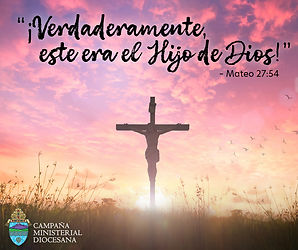
Mt 26:14—27:66 Then one of the Twelve, who was called Judas Iscariot, went to the chief priestsand said, “What are you willing to give me if I hand him over to you?” They paid him thirty pieces of silver,and from that time on he looked for an opportunity to hand him over.On the first day of the Feast of Unleavened Bread, the disciples approached Jesus and said, “Where do you want us to prepare for you to eat the Passover?” He said, “Go into the city to a certain man and tell him, ‘The teacher says, “My appointed time draws near; in your house I shall celebrate the Passover with my disciples.”’”The disciples then did as Jesus had ordered, and prepared the Passover.When it was evening, he reclined at table with the Twelve.And while they were eating, he said, “Amen, I say to you, one of you will betray me.” Deeply distressed at this, they began to say to him one after another, “Surely it is not I, Lord?”He said in reply, “He who has dipped his hand into the dish with me is the one who will betray me.The Son of Man indeed goes, as it is written of him, but woe to that man by whom the Son of Man is betrayed. It would be better for that man if he had never been born.”Then Judas, his betrayer, said in reply, “Surely it is not I, Rabbi?” He answered, “You have said so.”While they were eating, Jesus took bread, said the blessing, broke it, and giving it to his disciples said, “Take and eat; this is my body.” Then he took a cup, gave thanks, and gave it to them, saying, “Drink from it, all of you,for this is my blood of the covenant, which will be shed on behalf of many for the forgiveness of sins.I tell you, from now on I shall not drink this fruit of the vine until the day when I drink it with you new in the kingdom of my Father.”Then, after singing a hymn, they went out to the Mount of Olives.Then Jesus said to them, “This night all of you will have your faith in me shaken, for it is written: ‘I will strike the shepherd,and the sheep of the flock will be dispersed’;but after I have been raised up, I shall go before you to Galilee.”Peter said to him in reply, “Though all may have their faith in you shaken, mine will never be.”Jesus said to him, “Amen, I say to you, this very night before the cock crows, you will deny me three times.” Peter said to him, “Even though I should have to die with you, I will not deny you.” And all the disciples spoke likewise.Then Jesus came with them to a place called Gethsemane, and he said to his disciples, “Sit here while I go over there and pray.” He took along Peter and the two sons of Zebedee, and began to feel sorrow and distress.Then he said to them, “My soul is sorrowful even to death.*Remain here and keep watch with me.”He advanced a little and fell prostrate in prayer, saying, “My Father, if it is possible, let this cup pass from me; yet, not as I will, but as you will.”When he returned to his disciples he found them asleep. He said to Peter, “So you could not keep watch with me for one hour?Watch and pray that you may not undergo the test. The spirit is willing, but the flesh is weak.”Withdrawing a second time, he prayed again, “My Father, if it is not possible that this cup pass without my drinking it, your will be done!”Then he returned once more and found them asleep, for they could not keep their eyes open.He left them and withdrew again and prayed a third time, saying the same thing again.Then he returned to his disciples and said to them, “Are you still sleeping and taking your rest? Behold, the hour is at hand when the Son of Man is to be handed over to sinners.Get up, let us go. Look, my betrayer is at hand.”While he was still speaking, Judas, one of the Twelve, arrived, accompanied by a large crowd, with swords and clubs, who had come from the chief priests and the elders of the people.His betrayer had arranged a sign with them, saying, “The man I shall kiss is the one; arrest him.”Immediately he went over to Jesus and said, “Hail, Rabbi!”* and he kissed him.Jesus answered him, “Friend, do what you have come for.” Then stepping forward they laid hands on Jesus and arrested him.And behold, one of those who accompanied Jesus put his hand to his sword, drew it, and struck the high priest’s servant, cutting off his ear.Then Jesus said to him, “Put your sword back into its sheath, for all who take the sword will perish by the sword.Do you think that I cannot call upon my Father and he will not provide me at this moment with more than twelve legions of angels?But then how would the scriptures be fulfilled which say that it must come to pass in this way?”At that hour Jesus said to the crowds, “Have you come out as against a robber, with swords and clubs to seize me? Day after day I sat teaching in the temple area, yet you did not arrest me.But all this has come to pass that the writings of the prophets may be fulfilled.” Then all the disciples left him and fled.Those who had arrested Jesus led him away to Caiaphas the high priest, where the scribes and the elders were assembled.Peter was following him at a distance as far as the high priest’s courtyard, and going inside he sat down with the servants to see the outcome.The chief priests and the entire Sanhedrin kept trying to obtain false testimony against Jesus in order to put him to death,but they found none, though many false witnesses came forward. Finally two came forwardwho stated, “This man said, ‘I can destroy the temple of God and within three days rebuild it.’”The high priest rose and addressed him, “Have you no answer? What are these men testifying against you?”But Jesus was silent. Then the high priest said to him, “I order you to tell us under oath before the living God whether you are the Messiah, the Son of God.”Jesus said to him in reply, “You have said so. But I tell you:From now on you will see ‘the Son of Manseated at the right hand of the Power’and ‘coming on the clouds of heaven.’”Then the high priest tore his robes and said, “He has blasphemed! What further need have we of witnesses? You have now heard the blasphemy;what is your opinion?” They said in reply, “He deserves to die!”Then they spat in his face and struck him, while some slapped him,saying, “Prophesy for us, Messiah: who is it that struck you?”Now Peter was sitting outside in the courtyard. One of the maids came over to him and said, “You too were with Jesus the Galilean.”But he denied it in front of everyone, saying, “I do not know what you are talking about!”As he went out to the gate, another girl saw him and said to those who were there, “This man was with Jesus the Nazorean.”Again he denied it with an oath, “I do not know the man!”A little later the bystanders came over and said to Peter, “Surely you too are one of them; even your speech gives you away.”At that he began to curse and to swear, “I do not know the man.” And immediately a cock crowed.Then Peter remembered the word that Jesus had spoken: “Before the cock crows you will deny me three times.” He went out and began to weep bitterly.When it was morning, all the chief priests and the elders of the people took counsel against Jesus to put him to death.They bound him, led him away, and handed him over to Pilate, the governor.Then Judas, his betrayer, seeing that Jesus had been condemned, deeply regretted what he had done. He returned the thirty pieces of silver to the chief priests and elders, saying, “I have sinned in betraying innocent blood.” They said, “What is that to us? Look to it yourself.”Flinging the money into the temple, he departed and went off and hanged himself.The chief priests gathered up the money, but said, “It is not lawful to deposit this in the temple treasury, for it is the price of blood.”After consultation, they used it to buy the potter’s field as a burial place for foreigners.That is why that field even today is called the Field of Blood.Then was fulfilled what had been said through Jeremiah the prophet, “And they took the thirty pieces of silver, the value of a man with a price on his head, a price set by some of the Israelites,and they paid it out for the potter’s field just as the Lord had commanded me.”Now Jesus stood before the governor, and he questioned him, “Are you the king of the Jews?” Jesus said, “You say so.”And when he was accused by the chief priests and elders, he made no answer.Then Pilate said to him, “Do you not hear how many things they are testifying against you?”But he did not answer him one word, so that the governor was greatly amazed.Now on the occasion of the feast the governor was accustomed to release to the crowd one prisoner whom they wished.And at that time they had a notorious prisoner called [Jesus] Barabbas.So when they had assembled, Pilate said to them, “Which one do you want me to release to you, [Jesus] Barabbas, or Jesus called Messiah?”For he knew that it was out of envy that they had handed him over.While he was still seated on the bench, his wife sent him a message, “Have nothing to do with that righteous man. I suffered much in a dream today because of him.”The chief priests and the elders persuaded the crowds to ask for Barabbas but to destroy Jesus.The governor said to them in reply, “Which of the two do you want me to release to you?” They answered, “Barabbas!”Pilate said to them, “Then what shall I do with Jesus called Messiah?” They all said, “Let him be crucified!”But he said, “Why? What evil has he done?” They only shouted the louder, “Let him be crucified!”When Pilate saw that he was not succeeding at all, but that a riot was breaking out instead, he took water and washed his hands in the sight of the crowd, saying, “I am innocent of this man’s blood. Look to it yourselves.”And the whole people said in reply, “His blood be upon us and upon our children.”Then he released Barabbas to them, but after he had Jesus scourged, he handed him over to be crucified.Then the soldiers of the governor took Jesus inside the praetorium and gathered the whole cohort around him.They stripped off his clothes and threw a scarlet military cloak about him.Weaving a crown out of thorns, they placed it on his head, and a reed in his right hand. And kneeling before him, they mocked him, saying, “Hail, King of the Jews!”They spat upon him and took the reed and kept striking him on the head.And when they had mocked him, they stripped him of the cloak, dressed him in his own clothes, and led him off to crucify him.As they were going out, they met a Cyrenian named Simon; this man they pressed into service to carry his cross.And when they came to a place called Golgotha (which means Place of the Skull),they gave Jesus wine to drink mixed with gall. But when he had tasted it, he refused to drink.After they had crucified him, they divided his garments by casting lots;then they sat down and kept watch over him there.And they placed over his head the written charge against him: This is Jesus, the King of the Jews.Two revolutionaries were crucified with him, one on his right and the other on his left.Those passing by reviled him, shaking their headsand saying, “You who would destroy the temple and rebuild it in three days, save yourself, if you are the Son of God, [and] come down from the cross!”Likewise the chief priests with the scribes and elders mocked him and said,“He saved others; he cannot save himself. So he is the king of Israel! Let him come down from the cross now, and we will believe in him.He trusted in God; let him deliver him now if he wants him. For he said, ‘I am the Son of God.’”The revolutionaries who were crucified with him also kept abusing him in the same way.From noon onward, darkness came over the whole land until three in the afternoon.And about three o’clock Jesus cried out in a loud voice, “Eli, Eli, lema sabachthani?” which means, “My God, my God, why have you forsaken me?”Some of the bystanders who heard it said, “This one is calling for Elijah.”Immediately one of them ran to get a sponge; he soaked it in wine, and putting it on a reed, gave it to him to drink.But the rest said, “Wait, let us see if Elijah comes to save him.”But Jesus cried out again in a loud voice, and gave up his spirit.And behold, the veil of the sanctuary was torn in two from top to bottom. The earth quaked, rocks were split,tombs were opened, and the bodies of many saints who had fallen asleep were raised.And coming forth from their tombs after his resurrection, they entered the holy city and appeared to many.The centurion and the men with him who were keeping watch over Jesus feared greatly when they saw the earthquake and all that was happening, and they said, “Truly, this was the Son of God!”There were many women there, looking on from a distance, who had followed Jesus from Galilee, ministering to him.Among them were Mary Magdalene and Mary the mother of James and Joseph, and the mother of the sons of Zebedee.When it was evening, there came a rich man from Arimathea named Joseph, who was himself a disciple of Jesus. He went to Pilate and asked for the body of Jesus; then Pilate ordered it to be handed over.Taking the body, Joseph wrapped it [in] clean linenand laid it in his new tomb that he had hewn in the rock. Then he rolled a huge stone across the entrance to the tomb and departed.But Mary Magdalene and the other Mary remained sitting there, facing the tomb.The next day, the one following the day of preparation, the chief priests and the Pharisees gathered before Pilateand said, “Sir, we remember that this impostor while still alive said, ‘After three days I will be raised up.’Give orders, then, that the grave be secured until the third day, lest his disciples come and steal him and say to the people, ‘He has been raised from the dead.’ This last imposture would be worse than the first.” Pilate said to them, “The guard is yours; go secure it as best you can.”So they went and secured the tomb by fixing a seal to the stone and setting the guard.
Intercesión
Señor, en tu pasión, modelaste la fuerza y la dignidad con paciencia. Que tu gracia nos ayude a llevar nuestras cruces de manera similar, y, a través del apoyo a la Campaña Ministerial Diocesana, que podamos ayudar a otros a llevar sus propias cruces.
Dios nos ama tanto que envía a su Hijo a morir por nosotros. Dios desea tanto tener una relación personal con nosotros que comparte a Jesús con nosotros. Sin embargo, cuando experimentamos dolor y sufrimiento, nos preguntamos cómo puede ser este el plan de Dios para nosotros. ¿Dónde está Dios en la enfermedad, la violencia, la traición, las dificultades económicas, los desastres naturales y la crueldad? ¿Por qué Dios, que desea la intimidad con nosotros, parece tan lejano? ¿Y dónde está el Padre? Podemos sentir que Dios está lejos, pero no lo está. Dios nos recuerda: «Cuando me invoquen, y vengan y oren a mí, yo los escucharé» (Jeremías 29:12). Confiar en Dios durante los momentos difíciles nos acerca a Él. Y si, durante los momentos de prueba, nos abrimos a Dios, podemos ser instrumentos de su amor y gracia, tal como Cristo lo fue para quienes presenciaron su pasión. Al entrar en este tiempo sagrado del año litúrgico, consideren cómo pueden tomar la cruz y seguir a Jesús hacia una mayor intimidad con Dios. Oren por el éxito continuo de la Campaña Ministerial Diocesana y consideren apoyar la campaña para ayudar a aliviar las cruces que otros llevan.


March 21st-22nd
Intercession
May we have the strength to believe in God’s promises to us, even when we are most vulnerable. And, renewed in this faith, may we be a source of strength to others through support of the Diocesan Ministry Appeal.
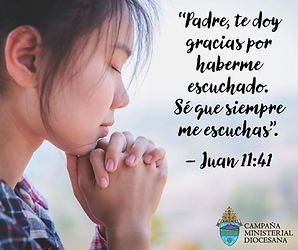
“’Father, I thank you for hearing me. I know that you always hear me.’” – John 11:41
Time and time again, we see examples of Jesus working miracles that demonstrate his identity as the long-awaited Messiah. This powerful passage cements Jesus’ divinity. Yet, at the same time, it confirms that Christ is also human. He loves Lazarus, Mary, and Martha. Jesus weeps for the loss of his friend and is deeply touched by the sorrow Mary and Martha feel at the death of their brother. He experiences these very human emotions because he is fully human. But he is also fully divine. He brings Lazarus back, from the death to life, from the darkness of the sealed tomb to the bright light of his family home and sisterly love. Christ’s deep love for this family reflects God’s love for us. It is personal. God is always present and wants to be part of our lives. Lazarus’ rising from the dead foreshadows Christ’s resurrection. Death has no power; Jesus will be with us always. When he is born, he is called “Emmanual,” or “God is with us.” When he visits the apostles the last time before ascending into heaven, he reminds them that he will be with them always, “even to the end of time” (Matthew 28:20). In times of darkness, we can be emissaries of this very real, very personal, love that Our Lord has for us. By making a gift to the Diocesan Ministry Appeal, we can make his presence known to those who need it most.

Gospel Reading Jn 11:1-45
Now a man was ill, Lazarus from Bethany, the village of Mary and her sister Martha.Mary was the one who had anointed the Lord with perfumed oil and dried his feet with her hair; it was her brother Lazarus who was ill.So the sisters sent word to him, saying, “Master, the one you love is ill.”When Jesus heard this he said, “This illness is not to end in death, but is for the glory of God, that the Son of God may be glorified through it.” Now Jesus loved Martha and her sister and Lazarus.So when he heard that he was ill, he remained for two days in the place where he was.Then after this he said to his disciples, “Let us go back to Judea.”The disciples said to him, “Rabbi, the Jews were just trying to stone you, and you want to go back there?” Jesus answered, “Are there not twelve hours in a day? If one walks during the day, he does not stumble, because he sees the light of this world. But if one walks at night, he stumbles, because the light is not in him.” He said this, and then told them, “Our friend Lazarus is asleep, but I am going to awaken him.”So the disciples said to him, “Master, if he is asleep, he will be saved.”But Jesus was talking about his death, while they thought that he meant ordinary sleep. So then Jesus said to them clearly, “Lazarus has died.And I am glad for you that I was not there, that you may believe. Let us go to him.”So Thomas, called Didymus, said to his fellow disciples, “Let us also go to die with him.” When Jesus arrived, he found that Lazarus had already been in the tomb for four days.Now Bethany was near Jerusalem, only about two miles away.And many of the Jews had come to Martha and Mary to comfort them about their brother. When Martha heard that Jesus was coming, she went to meet him; but Mary sat at home.Martha said to Jesus, “Lord, if you had been here, my brother would not have died. [But] even now I know that whatever you ask of God, God will give you.”Jesus said to her, “Your brother will rise.”Martha said to him, “I know he will rise, in the resurrection on the last day.” Jesus told her, “I am the resurrection and the life; whoever believes in me, even if he dies, will live, and everyone who lives and believes in me will never die. Do you believe this?”She said to him, “Yes, Lord. I have come to believe that you are the Messiah, the Son of God, the one who is coming into the world.”When she had said this, she went and called her sister Mary secretly, saying, “The teacher is here and is asking for you.”As soon as she heard this, she rose quickly and went to him.For Jesus had not yet come into the village, but was still where Martha had met him.So when the Jews who were with her in the house comforting her saw Mary get up quickly and go out, they followed her, presuming that she was going to the tomb to weep there.When Mary came to where Jesus was and saw him, she fell at his feet and said to him, “Lord, if you had been here, my brother would not have died.”When Jesus saw her weeping and the Jews who had come with her weeping, he became perturbed and deeply troubled,and said, “Where have you laid him?” They said to him, “Sir, come and see.”And Jesus wept. So the Jews said, “See how he loved him.”But some of them said, “Could not the one who opened the eyes of the blind man have done something so that this man would not have died?”So Jesus, perturbed again, came to the tomb. It was a cave, and a stone lay across it.Jesus said, “Take away the stone.” Martha, the dead man’s sister, said to him, “Lord, by now there will be a stench; he has been dead for four days.”Jesus said to her, “Did I not tell you that if you believe you will see the glory of God?”So they took away the stone. And Jesus raised his eyes and said, “Father, I thank you for hearing me.I know that you always hear me; but because of the crowd here I have said this, that they may believe that you sent me.” And when he had said this, he cried out in a loud voice, “Lazarus, come out!”The dead man came out, tied hand and foot with burial bands, and his face was wrapped in a cloth. So Jesus said to them, “Untie him and let him go.”Now many of the Jews who had come to Mary and seen what he had done began to believe in him.
Intercesión
Que tengamos la fuerza para creer en las promesas de Dios, incluso cuando somos más vulnerables. Y, renovados en esta fe, que seamos fuente de fortaleza para los demás a través de nuestro apoyo a la Campaña Ministerial Diocesana.
Una y otra vez, vemos ejemplos de Jesús obrando milagros que demuestran su identidad como el Mesías tan esperado. Este poderoso pasaje consolida la divinidad de Jesús. Sin embargo, al mismo tiempo, confirma que Cristo también es humano. Ama a Lázaro, María y Marta. Jesús llora por la pérdida de su amigo y se conmueve profundamente por el dolor que sienten María y Marta por la muerte de su hermano. Experimenta estas emociones tan humanas porque es plenamente humano. Pero también es plenamente divino. Resucita a Lázaro, de la muerte a la vida, de la oscuridad de la tumba sellada a la luz brillante de su hogar familiar y del amor fraterno. El profundo amor de Cristo por esta familia refleja el amor de Dios por nosotros. Es personal. Dios siempre está presente y quiere ser parte de nuestras vidas. La resurrección de Lázaro prefigura la resurrección de Cristo. La muerte no tiene poder; Jesús estará con nosotros siempre. Cuando nace, se le llama «Emanuel», o «Dios está con nosotros». Cuando visita a los apóstoles por última vez antes de ascender al cielo, les recuerda que estará con ellos siempre, «hasta el fin del mundo» (Mateo 28:20). En tiempos de oscuridad, podemos ser emisarios de este amor tan real y personal que nuestro Señor tiene por nosotros. Al hacer una donación a la Campaña Ministerial Diocesana, podemos dar a conocer su presencia a quienes más la necesitan.
March 14th-15th (4th Sunday of Lent)
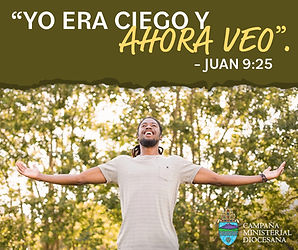
“I was blind and now I see.” – John 9:25
Intercession
Lord, open our eyes to your truth. Help us find ways to spread this truth, such as supporting the Diocesan Ministry Appeal, so that all we meet may experience your saving grace.

It’s difficult to wrap our brains around suffering. When bad things happen, we want to know why. Why does a good and faithful servant of the Lord have to suffer a protracted and painful death? Why is an innocent child born with a heart defect or must battle cancer? Why does one neighbor lose his home to a natural disaster while another escapes the storm’s wrath? We want to give pain meaning, to understand its purpose. That’s what the disciples are wondering when they ask Jesus why the man in today’s Gospel is blind. Is his lack of sight a physical manifestation of his sinfulness? Or his parents’? Is God punishing him for some transgression? No, Jesus says. Our Father is loving. Just as our parents would not wish us ill, neither does our Heavenly Father. Pain and suffering exist, but not because God actively wills it. Sorrows in this life are an opportunity to experience God’s grace, to draw closer to Him, to identify with the suffering Christ endured on the cross for us. The man’s blindness—and cure—helped advance Jesus’ ministry in making God known on earth: “it is so that the works of God might be made visible through him.” Funds raised by the Diocesan Ministry Appeal help ease suffering by making God’s love and mercy tangible through the Church’s ministries and programs that the Appeal supports. Please prayerfully consider easing others’ burdens with a gift to the DMA.
Gospel Reading: Jn 9:1-41
As he passed by he saw a man blind from birth. His disciples asked him, “Rabbi, who sinned, this man or his parents, that he was born blind?” Jesus answered, “Neither he nor his parents sinned; it is so that the works of God might be made visible through him. We have to do the works of the one who sent me while it is day. Night is coming when no one can work. While I am in the world, I am the light of the world.” When he had said this, he spat on the ground and made clay with the saliva, and smeared the clay on his eyes, and said to him, “Go wash in the Pool of Siloam” (which means Sent). So he went and washed, and came back able to see. His neighbors and those who had seen him earlier as a beggar said, “Isn’t this the one who used to sit and beg?” Some said, “It is,” but others said, “No, he just looks like him.” He said, “I am.” So they said to him, “[So] how were your eyes opened?” He replied, “The man called Jesus made clay and anointed my eyes and told me, ‘Go to Siloam and wash.’ So I went there and washed and was able to see.” And they said to him, “Where is he?” He said, “I don’t know.” They brought the one who was once blind to the Pharisees. Now Jesus had made clay and opened his eyes on a sabbath. So then the Pharisees also asked him how he was able to see. He said to them, “He put clay on my eyes, and I washed, and now I can see.” So some of the Pharisees said, “This man is not from God, because he does not keep the sabbath.” [But] others said, “How can a sinful man do such signs?” And there was a division among them. So they said to the blind man again, “What do you have to say about him, since he opened your eyes?” He said, “He is a prophet.” Now the Jews did not believe that he had been blind and gained his sight until they summoned the parents of the one who had gained his sight. They asked them, “Is this your son, who you say was born blind? How does he now see?” His parents answered and said, “We know that this is our son and that he was born blind. We do not know how he sees now, nor do we know who opened his eyes. Ask him, he is of age; he can speak for himself.” His parents said this because they were afraid of the Jews, for the Jews had already agreed that if anyone acknowledged him as the Messiah, he would be expelled from the synagogue. For this reason his parents said, “He is of age; question him.” So a second time they called the man who had been blind and said to him, “Give God the praise! We know that this man is a sinner.” He replied, “If he is a sinner, I do not know. One thing I do know is that I was blind and now I see.” So they said to him, “What did he do to you? How did he open your eyes?” He answered them, “I told you already and you did not listen. Why do you want to hear it again? Do you want to become his disciples, too?” They ridiculed him and said, “You are that man’s disciple; we are disciples of Moses! We know that God spoke to Moses, but we do not know where this one is from.” The man answered and said to them, “This is what is so amazing, that you do not know where he is from, yet he opened my eyes. We know that God does not listen to sinners, but if one is devout and does his will, he listens to him. It is unheard of that anyone ever opened the eyes of a person born blind. If this man were not from God, he would not be able to do anything.” They answered and said to him, “You were born totally in sin, and are you trying to teach us?” Then they threw him out. When Jesus heard that they had thrown him out, he found him and said, “Do you believe in the Son of Man?” He answered and said, “Who is he, sir, that I may believe in him?” Jesus said to him, “You have seen him and the one speaking with you is he.” He said, “I do believe, Lord,” and he worshiped him. Then Jesus said, “I came into this world for judgment, so that those who do not see might see, and those who do see might become blind.” Some of the Pharisees who were with him heard this and said to him, “Surely we are not also blind, are we?” Jesus said to them, “If you were blind, you would have no sin; but now you are saying, ‘We see,’ so your sin remains.
Intercesión
Señor, abre nuestros ojos a tu verdad. Ayúdanos a encontrar maneras de difundir esta verdad, como apoyando la Campaña Ministerial Diocesana, para que todos los que encontremos experimenten tu gracia salvadora
Es difícil comprender el sufrimiento. Cuando suceden cosas malas, queremos saber por qué. ¿Por qué un siervo bueno y fiel del Señor tiene que sufrir una muerte prolongada y dolorosa? ¿Por qué un niño inocente nace con un defecto cardíaco o tiene que luchar contra el cáncer? ¿Por qué un vecino pierde su casa a causa de un desastre natural mientras que otro escapa de la furia de la tormenta? Queremos darle sentido al dolor, comprender su propósito. Eso es lo que se preguntan los discípulos cuando le preguntan a Jesús por qué el hombre del Evangelio de hoy es ciego. ¿Es su ceguera una manifestación física de su pecado? ¿O del de sus padres? ¿Lo está castigando Dios por alguna transgresión? No, dice Jesús. Nuestro Padre es amoroso. Así como nuestros padres no nos desearían el mal, tampoco nuestro Padre Celestial. El dolor y el sufrimiento existen, pero no porque Dios lo quiera activamente. Las tristezas de esta vida son una oportunidad para experimentar la gracia de Dios, para acercarnos a Él, para identificarnos con el sufrimiento que Cristo soportó en la cruz por nosotros. La ceguera del hombre —y su curación— ayudaron a impulsar el ministerio de Jesús al dar a conocer a Dios en la tierra: «para que las obras de Dios se manifiesten en él». Los fondos recaudados por la Campaña Ministerial Diocesana ayudan a aliviar el sufrimiento haciendo tangible el amor y la misericordia de Dios a través de los ministerios y programas de la Iglesia que apoya la Campaña. Por favor, considere en oración aliviar las cargas de los demás con una donación a la Campaña Ministerial Diocesana.
March 7th-8th
“’Whoever drinks the water I shall give will never thirst.’” – John 4: 14
Intercession
Lord, through your death and resurrection, you have saved us from sin. May we know your redeeming power ourselves, and through support of the Diocesan Ministry Appeal, may we help others into your saving grace.

We live in one of the wealthiest nations in one of the most prosperous times in the history of the world. Our life is full of convenience and time for leisure. We flip a switch, and a room is illuminated. We can satiate our hunger quickly by popping food in a microwave or hitting a drive-thru on the way home from work. Need water? Turn on the tap. There’s no need to go to the well. But we are afflicted with a different kind of poverty, a poverty of spirit. Good thing for Samaritan woman that she didn’t live in our time, or she might have missed her chance for redemption. Jesus speaking to her, let alone asking her for a drink, is unheard of. Samaritans are considered “less than” and not worthy of interaction. But he goes even further. When she says the Messiah is coming, Jesus reveals himself to her: “’I am he, the one who is speaking with you.’” His message is received, and believed, and her life is changed forever. With Jesus, no one is outside the fold—not even Samaritans—and no one is beyond redemption—not even the gravest sinner. Are our priorities bringing us closer to Our Lord? Are we living according to God’s plan for us? Are we filling our "bucket” with Christ? As his disciples, we are called to live with heaven in mind, and we are also called to bring as many people as we can with us! The programs and ministries that the Diocesan Ministry Appeal support unite people with Our Lord. This Lent, please consider the DMA as a way of giving alms.
Gospel ReadingJn 4:5-42
So he came to a town of Samaria called Sychar, near the plot of land that Jacob had given to his son Joseph. Jacob’s well was there. Jesus, tired from his journey, sat down there at the well. It was about noon.A woman of Samaria came to draw water. Jesus said to her, “Give me a drink.”His disciples had gone into the town to buy food.The Samaritan woman said to him, “How can you, a Jew, ask me, a Samaritan woman, for a drink?” (For Jews use nothing in common with Samaritans.)Jesus answered and said to her, “If you knew the gift of God and who is saying to you, ‘Give me a drink,’ you would have asked him and he would have given you living water.”[The woman] said to him, “Sir, you do not even have a bucket and the well is deep; where then can you get this living water?Are you greater than our father Jacob, who gave us this well and drank from it himself with his children and his flocks?” Jesus answered and said to her, “Everyone who drinks this water will be thirsty again; but whoever drinks the water I shall give will never thirst; the water I shall give will become in him a spring of water welling up to eternal life.” The woman said to him, “Sir, give me this water, so that I may not be thirsty or have to keep coming here to draw water.”Jesus said to her, “Go call your husband and come back.”The woman answered and said to him, “I do not have a husband.” Jesus answered her, “You are right in saying, ‘I do not have a husband.’For you have had five husbands, and the one you have now is not your husband. What you have said is true.” The woman said to him, “Sir, I can see that you are a prophet. Our ancestors worshiped on this mountain; but you people say that the place to worship is in Jerusalem.” Jesus said to her, “Believe me, woman, the hour is comingwhen you will worship the Father neither on this mountainnor in Jerusalem.You people worship what you do not understand; we worship what we understand, because salvation is from the Jews. But the hour is coming, and is now here, when true worshipers will worship the Father in Spirit and truth; and indeed the Father seeks such people to worship him.God is Spirit, and those who worship him must worship inSpirit and truth.” The woman said to him, “I know that the Messiah is coming, the one called the Anointed; when he comes, he will tell us everything.”Jesus said to her, “I am he, the one who is speaking with you.” At that moment his disciples returned, and were amazedthat he was talking with a woman, but still no one said, “What are you looking for?” or “Why are you talking with her?”The woman left her water jar and went into the town and said to the people,“Come see a man who told me everything I have done.Could he possibly be the Messiah?”They went out of the town and came to him.Meanwhile, the disciples urged him, “Rabbi, eat.”But he said to them, “I have food to eat of which you do not know.”So the disciples said to one another, “Could someone have brought him something to eat?”Jesus said to them, “My food is to do the will of the one who sent me and to finish his work. Do you not say, ‘In four months the harvest will be here’? I tell you, look up and see the fields ripe for the harvest. The reaper is already receiving his payment and gathering crops for eternal life, so that the sower and reaper canrejoice together. For here the saying is verified that ‘One sows and anotherreaps.’ I sent you to reap what you have not worked for; others have done the work, and you are sharing the fruits of their work.”Many of the Samaritans of that town began to believe in him because of the word of the woman who testified, “He told me everything I have done.”When the Samaritans came to him, they invited him to staywith them; and he stayed there two days.Many more began to believe in him because of his word,and they said to the woman, “We no longer believe because of your word; for we have heard for ourselves, and we know that this is truly the savior of the world.”
Intercesión
Señor, por tu muerte y resurrección, nos has salvado del pecado. Que podamos experimentar tu poder redentor y, a través del apoyo a la Campaña Ministerial Diocesana, podamos ayudar a otros a alcanzar tu gracia salvadora.

Vivimos en una de las naciones más ricas, en una de las épocas más prósperas de la historia. Nuestra vida está llena de comodidades y tiempo libre. Encendemos un interruptor y la habitación se ilumina. Podemos saciar nuestra hambre rápidamente calentando comida en el microondas o pasando por un restaurante de comida rápida de camino a casa. ¿Necesitamos agua? Abrimos el grifo. No hay necesidad de ir al pozo. Pero estamos afligidos por otro tipo de pobreza, una pobreza de espíritu. Menos mal que la mujer samaritana no vivió en nuestra época, o podría haber perdido su oportunidad de redención. Que Jesús hablara con ella, y mucho menos que le pidiera de beber, era algo inaudito. Los samaritanos eran considerados inferiores y no dignos de interactuar con ellos. Pero Él va aún más allá. Cuando ella dice que el Mesías está por venir, Jesús se revela a ella: «Yo soy, el que habla contigo». Su mensaje es recibido y creído, y su vida cambia para siempre. Con Jesús, nadie está fuera del rebaño, ni siquiera los samaritanos, y nadie está más allá de la redención, ni siquiera el pecador más grande. ¿Nuestras prioridades nos acercan a Nuestro Señor? ¿Vivimos según el plan de Dios para nosotros? ¿Llenamos nuestra vida con Cristo? Como sus discípulos, estamos llamados a vivir con el cielo en mente, ¡y también estamos llamados a llevar con nosotros a tantas personas como podamos! Los programas y ministerios que apoya la Campaña Ministerial Diocesana unen a las personas con Nuestro Señor. Esta Cuaresma, por favor, considere la Campaña Ministerial Diocesana como una forma de dar limosna.
February 14th
“Do not think that I have come to abolish the law or the prophets. I have come not to abolish but to fulfill.Amen, I say to you, until heaven and earth pass away, not the smallest letter or the smallest part of a letter will pass from the law, until all things have taken place. Therefore, whoever breaks one of the least of these commandments and teaches others to do so will be called least in the kingdom of heaven. But whoever obeys and teaches these commandments will be called greatest in the kingdom of heaven. I tell you, unless your righteousness surpasses that of the scribes and Pharisees, you will not enter into the kingdom of heaven. - Mt 5:17-37

Intercession
May we respond to Christ’s call to lead lives of virtue, to follow his laws with grateful hearts, and seek ways to sustain the faith of others, such as supporting of the Diocesan Ministry Appeal.
Jesus certainly shook things up with his ministry. He declares, very clearly, that he is replacing the laws of Moses from the Old Testament with a new Law. Yet, Jesus, who was raised in a devoted Jewish family, also makes clear that he is not abolishing God’s laws but fulfilling them. As the Son of Man, he has the authority to deepen the laws Moses established. The new era that Jesus is ushering in holds believers to a higher standard than what the scribes and Pharisees practice. Luckily, God doesn’t expect perfection from us. Though made in His image and likeness, we are human. Thus, we are flawed. Even though we fall short of living according to our Heavenly Father’s laws, our desire to try – our good intentions – please God. And through grace, the Lord provides the strength to follow the new commandments that Jesus sets forth in today’s Gospel. We just need to remember to call on God to be our help: “Ask and it will be given to you; seek and you will find; knock and the door will be opened to you. For everyone who asks, receives; and the one who seeks, finds; and to the one who knocks, the door will be opened” (Matthew 7:7-8).We can be a channel of God’s love and mercy for others who are “asking,” “seeking,” and “knocking” when we support the ministries and programs that the Diocesan Ministry Appeal makes possible.

Intercesión
Que respondamos al llamado de Cristo a vivir vidas virtuosas, a seguir sus leyes con gratitud y a buscar maneras de sostener la fe de los demás, como apoyando la Campaña Ministerial Diocesana.
Jesús ciertamente transformó las cosas con su ministerio. Declara, muy claramente, que está reemplazando las leyes de Moisés del Antiguo Testamento con una nueva Ley. Sin embargo, Jesús, quien se crio en una familia judía devota, también deja claro que no está aboliendo las leyes de Dios, sino que las está cumpliendo. Como Hijo del Hombre, tiene la autoridad para profundizar las leyes que Moisés estableció. La nueva era que Jesús inaugura exige a los creyentes un estándar más alto que el que practican los escribas y fariseos.
Dios no espera perfección de nosotros. Aunque creados a su imagen y semejanza, somos humanos. Por lo tanto, tenemos defectos. Aunque no alcancemos a vivir de acuerdo con las leyes de nuestro Padre Celestial, nuestro deseo de intentarlo —nuestras buenas intenciones— agradan a Dios. Y por su gracia, el Señor nos da la fuerza para seguir los nuevos mandamientos que Jesús establece en el Evangelio de hoy. Solo debemos recordar pedirle a Dios que nos ayude: «Pedid, y se os dará; buscad, y hallaréis; llamad, y se os abrirá. Porque todo el que pide, recibe; el que busca, encuentra; y al que llama, se le abrirá» (Mateo 7:7-8).
Podemos ser un canal del amor y la misericordia de Dios para quienes piden, buscan y llaman cuando apoyamos los ministerios y programas que la Campaña Ministerial Diocesana hace posible.
February 7th
“You are the salt of the earth. But if salt loses its taste, with what can it be seasoned? It is no longer good for anything but to be thrown out and trampled underfoot. You are the light of the world. A city set on a mountain cannot be hidden. Nor do they light a lamp and then put it under a bushel basket; it is set on a lampstand, where it gives light to all in the house. Just so, your light must shine before others, that they may see your good deeds and glorify your heavenly Father." Mt 5:13-16

Intercession
May our thoughts, words, and actions, like supporting the Diocesan Ministry Appeal, reflect Christ’s light for others.
The song “They’ll Know We Are Christians by Our Love” says it all. As followers of Christ, we are called to serve, to love. Jesus’ ministry involved both preaching, as we saw in last week’s Gospel with the Sermon on the Mount, and service. There are many, many accounts of Jesus giving sight to the blind, healing the lame, and resurrecting the dead. Our faith, too, is one of prayer and of action. We attend Mass and sit with the Scripture, and we offer Christ’s consolation to the poor and marginalized, provide companionship to the lonely, and share our talents with our parish community. We “are the light of the world.” When Jesus says our “light must shine before others” and instructs us to not “put it under a bushel basket,” he wants us to reveal God’s goodness to those we meet and bring others to the Father. This isn’t bragging about our good deeds to massage our egos or boost our self-importance in the eyes of others. It’s about being an active participant in building the Kingdom of God on Earth. We do good works to glorify God and carry out Jesus’ mission today. Good works could be as simple as sharing a meal with an elderly neighbor who has just lost her husband. It could be donating canned goods to the local Cub Scout’s food drive. Or we could live our faith by making a gift to the Diocesan Ministry Appeal and be a light for those who need to feel God’s goodness.
Llamado al Ministerio Diocesano 2026

Intercesión
Que nuestros pensamientos, palabras y acciones, como apoyar la Campaña Ministerial Diocesana, reflejen la luz de Cristo para los demás.
La canción "Sabrán que somos cristianos por nuestro amor" lo dice todo. Como seguidores de Cristo, estamos llamados a servir, a amar. El ministerio de Jesús implicó tanto la predicación, como vimos en el Evangelio de la semana pasada con el Sermón de la Montaña, como el servicio. Hay muchísimos relatos de Jesús dando la vista a los ciegos, sanando a los cojos y resucitando a los muertos. Nuestra fe también es una fe de oración y acción. Asistimos a Misa y nos sentamos a leer las Escrituras, ofrecemos el consuelo de Cristo a los pobres y marginados, acompañamos a los solitarios y compartimos nuestros talentos con nuestra comunidad parroquial. Somos la luz del mundo. Cuando Jesús dice que nuestra luz debe brillar ante los demás y nos instruye a no "ponerla bajo el celemín", quiere que revelemos la bondad de Dios a quienes conocemos y que los llevemos al Padre. No se trata de alardear de nuestras buenas obras para alimentar nuestro ego ni para darnos importancia a los demás. Se trata de participar activamente en la construcción del Reino de Dios en la Tierra. Hacemos buenas obras para glorificar a Dios y llevar a cabo la misión de Jesús hoy. Pueden ser tan sencillas como compartir una comida con una vecina mayor que acaba de perder a su esposo. Podrían ser donar alimentos enlatados a la colecta de alimentos de los Lobatos Scouts locales. O podríamos vivir nuestra fe haciendo una donación a la Campaña del Ministerio Diocesano y ser una luz para quienes necesitan sentir la bondad de Dios.
April 25th-26th
Intercession
May those who are struggling to find their way, discover it through the programs and ministries the Diocesan Ministry Appeal supports, recognizing the truth of your Word and believing that you are the gate, the only way to eternal life.

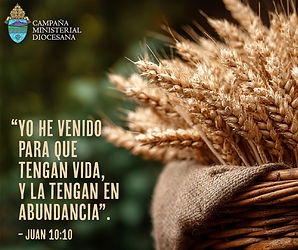
Being nurtured and cared for is a wonderful feeling. As children, our parents and grandparents provide the love and safety of a warm family life. When we go to school, our teachers join them in encouraging our curiosity. And at all stages of life, we find support in our friendships. Jesus, the Good Shepherd, is the ultimate caretaker. His love for us is personal, even protective. Just as a dutiful shepherd knows every sheep in his flock, Jesus knows each of us and he calls us by name. In him, we are safe. In him, we find rest. And in him we “have life and have it more abundantly.” As a Church, we are invited to reflect that same shepherding love in the world—to be the voice that calls others to hope, healing, and faith. In that spirit, please consider supporting this year’s Diocesan Ministry Appeal. Your gift helps extend Christ’s care to many in need.
Gospel Reading: Jn 10:1-10
“Amen, amen, I say to you, whoever does not enter a sheepfold through the gate but climbs over elsewhere is a thief and a robber.But whoever enters through the gate is the shepherd of the sheep.The gatekeeper opens it for him, and the sheep hear his voice, as he calls his own sheep by name and leads them out.When he has driven out all his own, he walks ahead of them, and the sheep follow him, because they recognize his voice.But they will not follow a stranger; they will run away from him, because they do not recognize the voice of strangers.”Although Jesus used this figure of speech, they did not realize what he was trying to tell them.So Jesus said again, “Amen, amen, I say to you, I am the gate for the sheep.All who came [before me] are thieves and robbers, but the sheep did not listen to them.I am the gate. Whoever enters through me will be saved, and will come in and go out and find pasture.A thief comes only to steal and slaughter and destroy; I came so that they might have life and have it more abundantly.
Intercesión
Que aquellos que luchan por encontrar su camino lo descubran a través de los programas y ministerios que apoya la Campaña Ministerial Diocesana, reconociendo la verdad de tu Palabra y creyendo que tú eres la puerta, el único camino a la vida eterna.
Ser nutridos y cuidados es una sensación maravillosa. De niños, nuestros padres y abuelos nos brindan el amor y la seguridad de una cálida vida familiar. Cuando vamos a la escuela, nuestros maestros se unen a ellos para fomentar nuestra curiosidad. Y en todas las etapas de la vida, encontramos apoyo en nuestras amistades. Jesús, el Buen Pastor, es el cuidador por excelencia. Su amor por nosotros es personal, incluso protector. Así como un pastor diligente conoce a cada oveja de su rebaño, Jesús nos conoce a cada uno de nosotros y nos llama por nuestro nombre. En Él estamos seguros. En Él encontramos descanso. Y en Él “tenemos vida, y la tenemos en abundancia”. Como Iglesia, estamos invitados a reflejar ese mismo amor pastoral en el mundo, a ser la voz que llama a otros a la esperanza, la sanación y la fe. Con ese espíritu, les pedimos que consideren apoyar la Campaña Ministerial Diocesana de este año. Su donación ayuda a extender el cuidado de Cristo a muchos necesitados.